Hypnotic trance
Living with 7 vampiresHypnotic trance is a recurring supernatural state marked by the separation of bodily movement from conscious intention. The affected person remains physically present, but awareness becomes heavy or inaccessible, the body acts without permission, and outside commands can redirect movement. Its decisive narrative importance is that it makes apparent death, possession, and ordinary sleep difficult to distinguish: a person may look lifeless while still being recoverable, yet may also be compelled into danger before anyone understands what is happening.
Definition and Bodily Experience
Hypnotic trance first appears through a distinctly physical loss of agency rather than through an explanation or diagnosis. Y/N’s head suddenly becomes heavy, the eyes grow heavy, and the sensation is that life has left the body. The experience is not merely drowsiness. Y/N’s hand reaches toward the hand held out nearby, and the person begins walking, following that presence despite wanting to resist. Speech and ordinary action are unavailable, so the body continues while conscious intention has been cut off from it.
The same condition is later described as a feeling that the soul has left the body. When an unseen voice tells Y/N to turn around, Y/N does not want to obey but turns anyway, repeating the earlier pattern in which an external direction overrides personal choice. The recurrence links the trance to a larger supernatural threat rather than to an isolated moment of fear. The language of heaviness, departure, and forced motion makes the state legible first as an embodied experience and only afterward as a named phenomenon.
Manifestations in the Plot
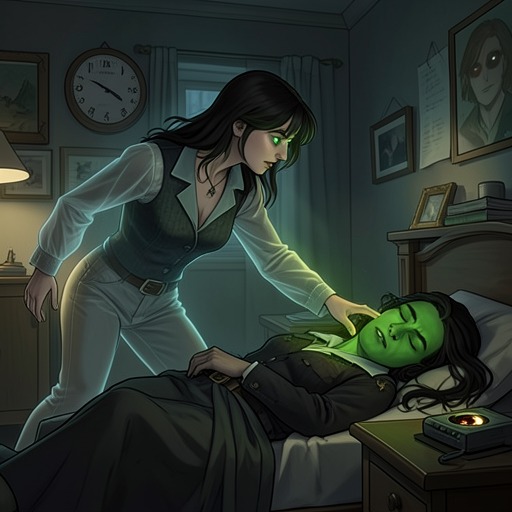
During the encounter with the strange shadow person, Y/N’s body remains lifeless even after the shadow flees, crying that it burns. Suga asks whether Y/N is all right and waves a hand in front of Y/N’s face, but Y/N cannot react. J-Hope turns Y/N around and tries the same test, receiving no response. The scene therefore presents trance as a condition visible to observers through failed interaction: the body is there, the eyes and limbs can be approached, yet the person cannot answer or voluntarily respond.
J-Hope concludes that the situation is harder than expected and apologizes before slapping Y/N. The blow causes Y/N to fall, but the attempt shows how the vampires treat the state as something that might be interrupted through force when gentler appeals fail. The episode also exposes the danger of interpreting immobility as death. The condition is severe enough to resemble the end of life, but the later explanation confirms that bodily stillness and loss of control do not necessarily mean that the person has died.
Explanation and Distinction from Death
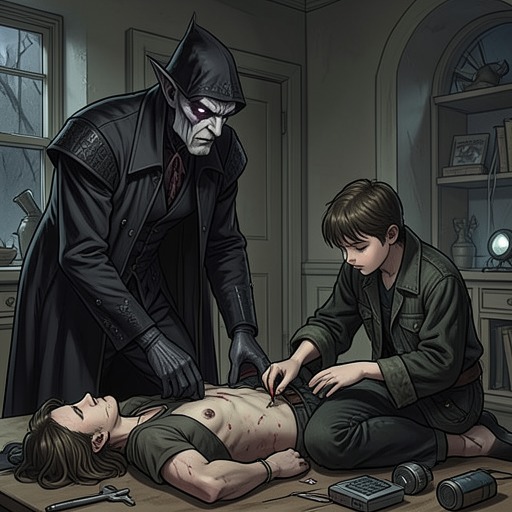
J-Hope eventually explains the phenomenon after Suga suddenly appears dead. Y/N identifies it as a kind of hypnosis that makes a person feel as though life has left the body. Jungkook asks whether Suga is dead, and Y/N immediately corrects that conclusion: Suga is not dead but cannot control his own body. This exchange turns a frightening spectacle into a recognizable state within the supernatural system of the story.
The explanation also establishes the trance as a shared vulnerability. Y/N says that the same thing has happened to Y/N several times, while Suga’s apparent collapse demonstrates that the vampires are susceptible as well. The state therefore crosses the boundary between human and vampire rather than belonging exclusively to one species. Its function is not simply to incapacitate a victim; it destabilizes the categories by which the characters identify life, death, agency, and bodily ownership.
Relation to the Supernatural Order
The trance operates alongside the story’s wider mythology of the other world and green-eyed entities. J-Hope explains that another world exists nearby and that beings there, unable to pass through a gate, sometimes take over the bodies of people like the vampires while they sleep. This account gives hypnotic trance a possible mechanism: loss of control is connected to intrusion from outside the ordinary world, and sleep becomes a vulnerable threshold rather than a safe retreat.
That mythology explains why the trance repeatedly carries both psychological and political force. The victim’s body is not destroyed; it is occupied, directed, or rendered unavailable to its own consciousness. In practical terms, the vampires must monitor one another, recognize signs of intrusion, and intervene when someone appears dead or unresponsive. The body becomes contested territory, and the distinction between a person and the force acting through that person cannot be settled by appearance alone.
Narrative Significance
Hypnotic trance is one of the narrative’s clearest recurring images of agency under pressure. Y/N follows a hand without being able to stop, turns in response to a command that Y/N does not want to obey, and remains unable to react while others wave before Y/N’s face. These repetitions make the condition more than a single supernatural trick: each recurrence returns to the same structural fear that consciousness may remain present while action has been taken away.
At the same time, the trance creates a limited possibility of recovery. Suga is mistaken for dead but is later understood to be unable to control his body, and Y/N’s condition prompts J-Hope and Suga to search for a response rather than accept the apparent loss. The state thus produces a recurring cycle of misrecognition, intervention, and revised understanding. It dramatizes the cost of supernatural contact in bodily terms while preserving the crucial possibility that a person who appears absent has not necessarily been lost.